
تعلم الكتابة بالإنجليزية: من الجملة الصحيحة إلى فقرة واضحة
الفقرة الجيدة لا تبدأ بكلمات معقدة؛ تبدأ بجملة رئيسة واضحة، ثم تفاصيل تخدمها، وروابط منطقية، ومراجعة تفصل المعنى عن القواعد.
فكر في at كنقطة، وon كسطح أو خط، وin كداخل مساحة أو فترة؛ ثم تعلم التعبيرات التي اختارها الاستعمال كما هي.
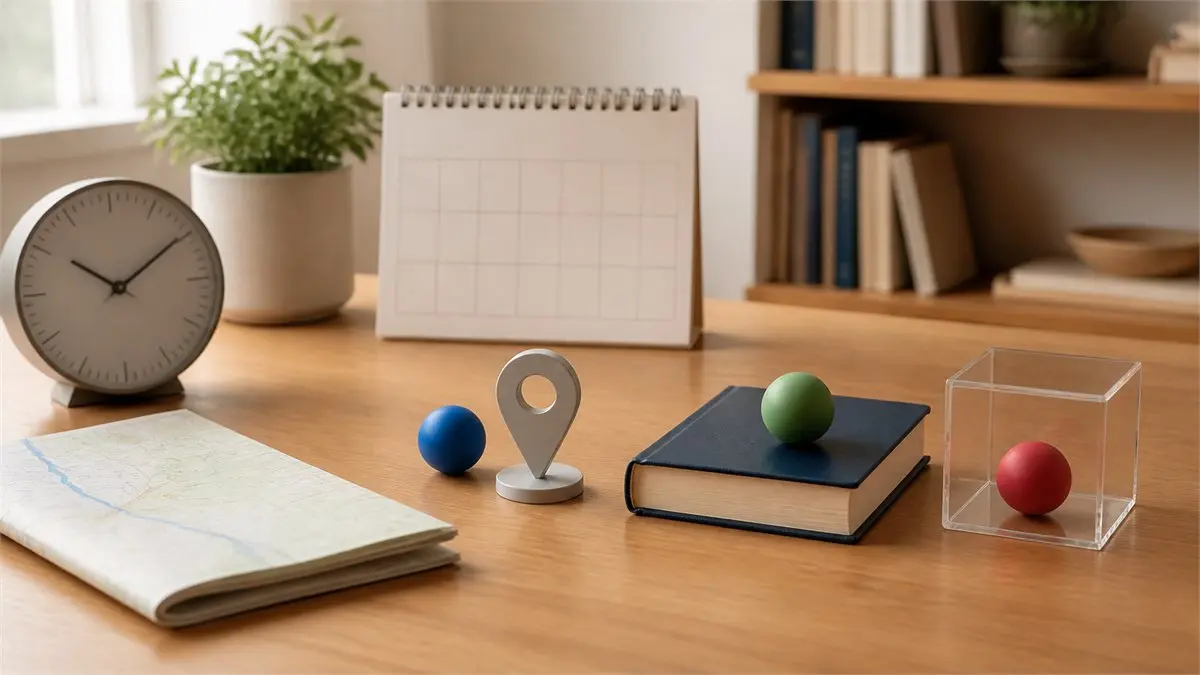
لماذا نقول at 7, لكن on Monday, وin July؟ ولماذا يكون الشخص in a car لكنه on a bus؟ يحفظ المتعلم قوائم، ثم يكتشف استثناءات فيظن أن حروف الجر بلا منطق.
توجد صورة ذهنية تساعد كثيرًا:
at = نقطة محددة.on = سطح أو خط أو يوم على التقويم.in = داخل مساحة أو فترة.هذه الصورة ليست قانونًا يفسر كل تعبير، لأن الاستعمال اللغوي يملك تراكيب ثابتة، لكنها تمنحك بداية قوية ثم تضيف إليها العبارات الشائعة كما هي.
نستعمل at مع وقت دقيق أو لحظة تُرى كنقطة:
at 7 o'clockat noonat midnightat sunriseat lunchtimeat the momentat nightأمثلة:
The lesson starts at nine.
I usually sleep at midnight.
She is busy at the moment.at the weekend شائع في البريطانية، وon the weekend شائع في الأمريكية.at Christmas قد يعني فترة عيد الميلاد عمومًا.at the beginning/end of...on Mondayon Fridayson 12 Mayon my birthdayon New Year's Dayon Monday morningon the first day of schoolأمثلة:
We have a meeting on Tuesday.
Her exam is on 18 June.
I called him on Saturday evening.
عندما نحدد صباحًا أو مساءً بيوم، نستعمل on:
in the morningon Monday morning.in Januaryin 2026in the 1990sin summerin the morningin the afternoonin the eveningin the futurein the pastأمثلة:
I was born in 1998.
The weather is hot in summer.
We study in the evening.I will call you in ten minutes.
تعني بعد عشر دقائق من الآن، لا أن المكالمة ستستمر عشر دقائق.
للمدة المستغرقة نقول مثلًا:
I finished the task in two hours. — أنجزته خلال ساعتين.
last week لا in last week.next Monday لا on next Monday في الاستعمال العادي.this morning.every year.yesterday, today, tomorrow بلا حرف جر عادة.I saw her last Friday.
We are leaving next month.
He called this morning.| أصغر/نقطة | يوم/تاريخ | فترة/وعاء | |---|---|---| | at 6:30 | on Tuesday | in March | | at noon | on 4 July | in 2025 | | at night | on Friday night | in winter | | at the moment | on my birthday | in the morning |
at the doorat the bus stopat the stationat the airportat schoolat workat homeat a partyat a meetingI am waiting at the entrance.
She is at work.
We met at the station.at لا يعني بالضرورة خارج المكان؛ يركز على الموقع أو النشاط، لا على الداخل الهندسي.
in the roomin the boxin the buildingin the gardenin Algiersin Algeriain Africain the skyin the waterThe keys are in my bag.
They live in Morocco.
There are many people in the room.on the tableon the wallon the flooron the pageon the roadon the coaston the borderon the left/rightYour phone is on the desk.
There is a picture on the wall.
The pharmacy is on the left.She is at the office. — هي في موقع العمل/المكتب عمومًا.She is in the office. — هي داخل الغرفة أو المبنى، مع تركيز على الداخل.كلاهما صحيح بحسب المقصود.
The children are at school. — في المدرسة بوصفهم يدرسون أو في موقعها.The parents are in the school. — داخل مبنى المدرسة، ربما لسبب آخر.وبالمثل:
at university, at work, at church في بعض الاستعمالات المؤسسية.in the university building عندما نركز على الداخل المادي.in the corner of the room — داخل زاوية الغرفة.at the corner of two streets — عند نقطة التقاء شارعين.The chair is in the corner.
There is a café at the corner of King Street and Park Road.at 12 Green Street — عنوان محدد.on Green Street — على شارع Green Street.in London — داخل المدينة.She lives at 12 Green Street, on the north side of the city, in London.on the buson the trainon the planeon a shipon the metroin a carin a taxion a bikeon a motorcycleon a horseأمثلة:
I left my bag on the bus.
She is waiting in the car.
We travelled on a train.
عند الحديث عن طريقة النقل بلا أداة تعريف، نستعمل غالبًا by:
by bus, by car, by plane.
لكن:
on foot — سيرًا على الأقدام.
in bed — في الفراش للنوم أو الراحة.on the bed — فوق سطح السرير.The child is in bed.
Your coat is on the bed.in the picture/photo.There is a mark on the photo.تراكيب ثابتة:
I saw it on TV.I heard it on the radio.I found it on the internet.The information is on the website.She is on the phone.لكن:
There is an error in the document. — داخل محتوى الوثيقة.
I read it in the newspaper.The article is on page 5.There is a photo on the front page.at the top of the page — عند أعلى الصفحة.on top of the box — فوق الصندوق وملامس له غالبًا.at homeat workat schoolat riskat leastat firstat the same timeat the endon time — في الموعد.on saleon holiday/vacationon businesson purposeon the wayon fireon dutyin time — قبل فوات الأوان.in troublein a hurryin lovein dangerin factin the endin advanceThe train arrived on time. — في الموعد المحدد.We arrived in time to catch the train. — وصلنا قبل أن يفوتنا.at the end of the film — عند الجزء الأخير من الفيلم.In the end, they decided to stay. — في النهاية/بعد كل شيء.in Monday → on Monday.at July → in July.on 7 o'clock → at 7 o'clock.in night → at night.at the morning → in the morning.in the bus عندما تقصد راكبًا → on the bus غالبًا.on the car عندما تكون داخلها → in the car.in home → at home.on last week → last week.in the picture صحيح للشخص الظاهر، لا on the picture.atonininlast nightonatnext weekonininatonatinoninoninatonatinoninonbyononinخذ ثلاثة أشياء: صندوق وكتاب وقلم.
The pen is in the box.The pen is on the book.The pen is at the box أقل طبيعية وحدها؛ نحتاج سياق نقطة، مثل Meet me at the box near the entrance.هذا يكشف أن الصورة تساعد، لكن الاختيار يتبع الطريقة التي نصور بها المكان في المعنى.
هكذا استقر الاستعمال؛ احفظهما كتعبيرين. الصورة العامة مفيدة لكنها لا تلغي التراكيب الثابتة.
الاثنان صحيحان بحسب التنوع: at the weekend شائع بريطانيًا، وon the weekend شائع أمريكيًا.
قد تستعملها عندما تركز على داخل المركبة ماديًا في وصف خاص، لكن للراكب في وسيلة النقل نقول عادة on the bus.
at home حالة أو موقع عام: في المنزل. in the house يركز على داخل المبنى.
خزّن العبارة كاملة داخل جملة: at night, on time, in bed. لا تحفظ حرف الجر منفردًا.
اجعل at نقطة، وon سطحًا أو يومًا على التقويم، وin وعاءً أو فترة. ثم أضف العبارات التي اختارها الاستعمال مثل at night, on the bus, وin bed. الفهم يعطيك الاتجاه، والجمل المتكررة تثبت التفاصيل.
في مُبين يمكن أن تتكرر حروف الجر داخل مواقف وصور ونصوص، فتتذكرها من العلاقة والمعنى لا من قائمة مترجمة فقط.
تقييمك يدخل مباشرة في مراجعة المقالات وتحسينها.
جرّب درسًا قصيرًا يجمع الصوت وترتيب الجملة، ثم قرر إن كانت الطريقة تناسبك.

الفقرة الجيدة لا تبدأ بكلمات معقدة؛ تبدأ بجملة رئيسة واضحة، ثم تفاصيل تخدمها، وروابط منطقية، ومراجعة تفصل المعنى عن القواعد.

السؤال الأول ليس: هل الكلمة تبدأ بحرف حركة؟ بل: هل الاسم مفرد معدود، وهل هو واحد غير محدد أم شيء يعرفه المتحدث والمستمع؟

ابدأ بتحديد الفعل المساعد؛ فإذا وُجد تقدّم على الفاعل، وإذا لم يوجد في الحاضر أو الماضي البسيط نستدعي do أو does أو did.